
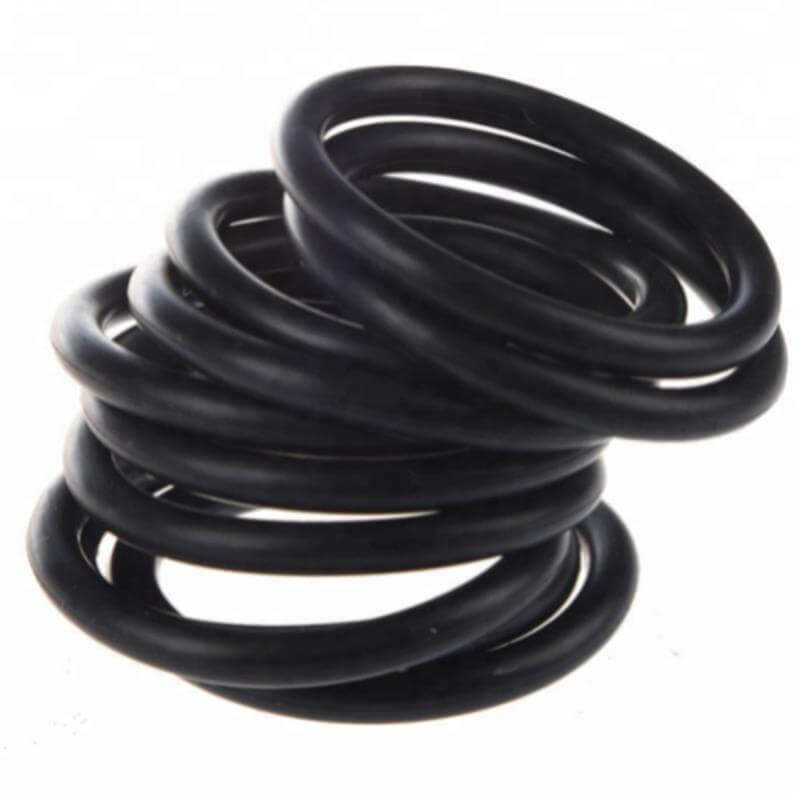
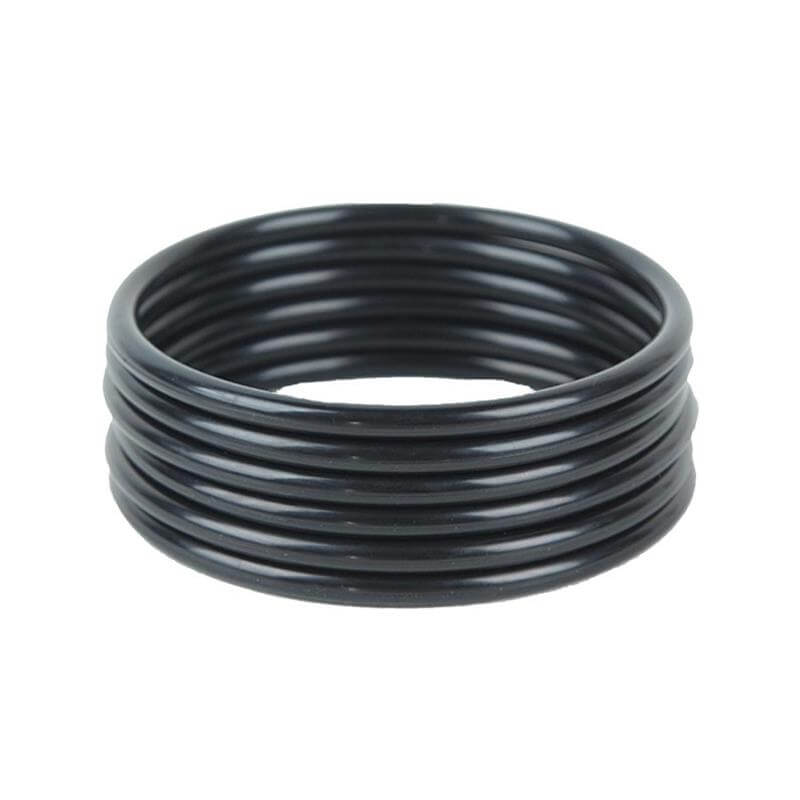
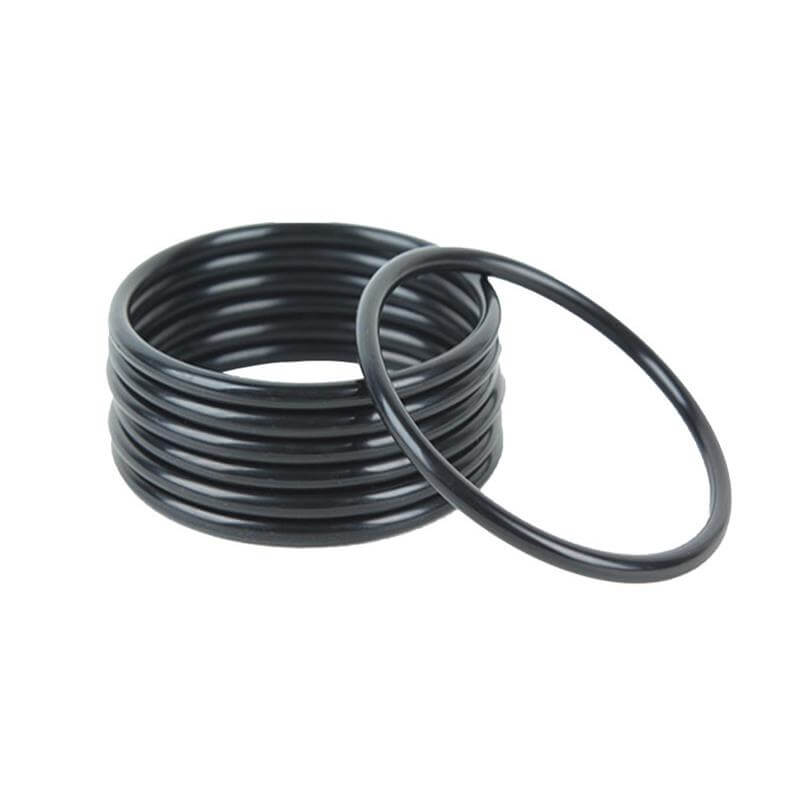
EPR / EPDM O-Rings

We are a trustable China EPDM o-ring manufacturer who can produce high-quality rubber seals for you.

Share to SNS:

Description

EPDM O-Rings (also known as ethylene propylene or EPR o-rings) are circular seals with an O-shaped cross-section made from ethylene propylene diene monomer rubber. As part of the polyolefin family, EPDM offers excellent vulcanization characteristics and outstanding resistance to oxidation, ozone, and weathering. It has a relatively low specific gravity compared to many commercial elastomers such as FKM or NBR and can incorporate large amounts of fillers with minimal impact on key properties.

Savvy Rubber produces both standard and peroxide-cured EPDM o-rings. Peroxide curing creates stable carbon-carbon crosslinks, delivering lower compression set, improved heat resistance, and minimal odor compared to conventional sulfur systems. For demanding applications, such as food-grade medical or high-temperature sealing, we also offer controlled post-curing to enhance performance further and meet international standards. Our in-house compounding and precision molding ensure consistent quality across all product grades.

Specifications

  • Material: EPDM / EPR / Ethylene Propylene Diene Monomer
  • Temperature Range / Rating: -50 °C (-58 °F) to 150°C (302 °F)
  • Low Operating Temperature Limit: -50 °C (-58 °F)
  • High Operating Temperature Limit: 150°C (302 °F)
  • Durometer Hardness Range: Shore A 40-90
  • Standard Durometer Hardness: Shore A 70
  • Color: Black (standard), custom color is available
  • Cross Section Profile: Round (standard), square, X, D, T, custom
  • Cross Section Width (CS): 0.5 to 20 mm (0.020 to 0.787 inch)
  • Inside Diameter (ID): 0.7 to 2965 mm (0.028 to 116.732 inch)
  • Standard Size: AS 568, BS 1806, ISO 3601, DIN 3771, JIS B 2401
  • Shelf Life: About 8 years
  • Compliance: RoHS, REACH, FDA (available upon request)
  • Price Level: Moderate

Resistance Compatibility

The chart below summarizes the typical resistance characteristics of standard EPDM rubber to common media and environmental factors. Ratings are based on industry-standard evaluations: Excellent (recommended), Good (suitable with limitations), Fair (limited use), and Poor (not recommended).

Excellent

Good

Fair

Poor

Material Data Sheet

The following table presents the physical properties and fluid resistance performance of our standard EPDM/EPR O-ring material, formulated to meet ASTM D2000 M4CA710 specifications. All test results are based on cured compounds tested per the indicated ASTM methods, including heat aging, compression set, and exposure to Ozone and water.

This is the Material Data Sheet (MDS) for our standard 70 Shore A EPDM compound. Savvy Rubber also offers and routinely tests 40, 50, 60, 80, and 90 Shore A EPDM formulations. If you require data for other hardness grades, please contact our sales team.

EPDM Shore A 70 Material Data Sheet
Test Standard: ASTM D2000 M4CA710 A25 B35 C32 EA14 F19
ORIGINAL PHYSICAL PROPERTIES TEST METHOD REQUIREMENTS TEST RESULTS
Hardness Shore A D2240 70±5 72
Tensile Strength, MPa (psi) D412 10 (1450) min. 12 (1740)
Ultimate Elongation, % 200 min. 385
Specific Gravity (g/cm³) 1.13
HEAT RESISTANCE 70H AT 125℃ (A25) TEST METHOD REQUIREMENTS TEST RESULTS
Hardness Change, Points D865 +10 max. +6
Tensile Strength Change, % -20 max. -8
Ultimate Elongation Change, % -40 max. -17
COMPRESSION SET, 22H AT 125℃ (B35) TEST METHOD REQUIREMENTS TEST RESULTS
Permanent Set % D395 70 max. 28
OZONE RESISTANCE, 50pphm, 70H AT 40℃ (C32) TEST METHOD REQUIREMENTS TEST RESULTS
No Cracks D1171 PASS PASS
WATER RESISTANCE, 70H AT 100℃ (EA14) TEST METHOD REQUIREMENTS TEST RESULTS
Hardness Change, Points D471 -4
Tensile Strength Change, % -9
Ultimate Elongation Change, % +3
Volume Change, % -5 to +5 +2
LOW TEMPERATURE RESISTANCE (F19) TEST METHOD REQUIREMENTS TEST RESULTS
Non-brittle after 3 Min at -40°C D2137 PASS PASS

Test results are typical values for Savvy Rubber standard Shore A 70 EPDM compound. Actual performance may vary based on operating conditions, fluid concentration, and exposure time. For critical applications, we recommend sample testing.

Advantages

EPDM o-rings offer excellent resistance to weathering, aging, and ozone, along with good chemical stability. They perform reliably with Freon and a wide range of refrigerants, making them ideal for HVAC and cooling applications. EPDM also shows good compatibility with glycol-based brake fluids, hot water, steam, weak acids, and alkalis. Their low specific gravity and ability to maintain flexibility over a broad temperature range further enhance sealing reliability in demanding environments.

Disadvantages

EPDM o-rings are not suitable for use with mineral oils, petroleum-based fuels, or hydrocarbon solvents, as these cause significant swelling and degradation. They also exhibit limited resistance to non-polar solvents, such as gasoline, kerosene, and aromatic compounds. Additionally, EPDM has relatively poor abrasion resistance and is not inherently flame-retardant, which restricts its use in dynamic, high-friction, or fire-sensitive applications unless specially formulated.

Applications

EPDM o-rings are renowned for their excellent resistance to heat, water, steam, weathering, ozone, and polar chemicals, making them ideal for automotive cooling systems, brake master cylinders, and HVAC refrigeration units that handle glycol-based fluids or refrigerants such as R134a and R410a.

They are also widely used in sanitary plumbing, potable water systems, and outdoor electrical enclosures, including solar junction boxes and LED housings. For food-grade, medical, and high-purity applications, peroxide-cured EPDM is specified to ensure low extractables and compliance with international safety standards.

Note that EPDM is not compatible with mineral oils, fuels, or hydrocarbon-based fluids.

You May Also Like

Send An Inquiry !