
High-Quality Trusted PU / Polyurethane O-Ring Manufacturer & Supplier in China
- Payment Way: T/T, Western Union, Paypal
- Incoterm: EXW, FOB, CIF
- Shipping Way: By Air or Sea
- Manufacturer Place: Ningbo, China
- Delivery Time: 7 - 30 days
- Factory Status: Stocked for Sale
Share to SNS:
Description
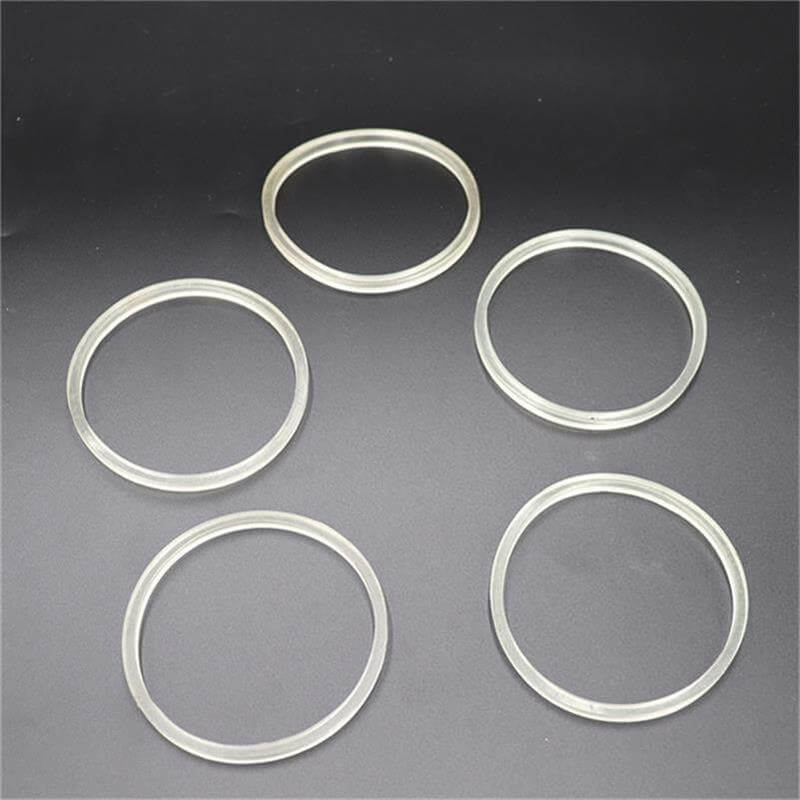
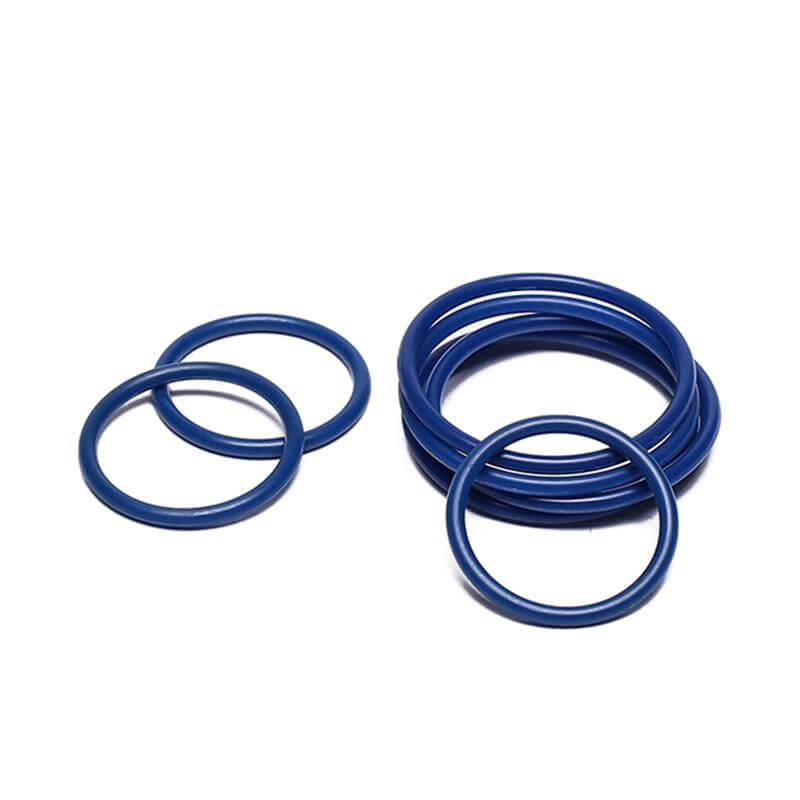
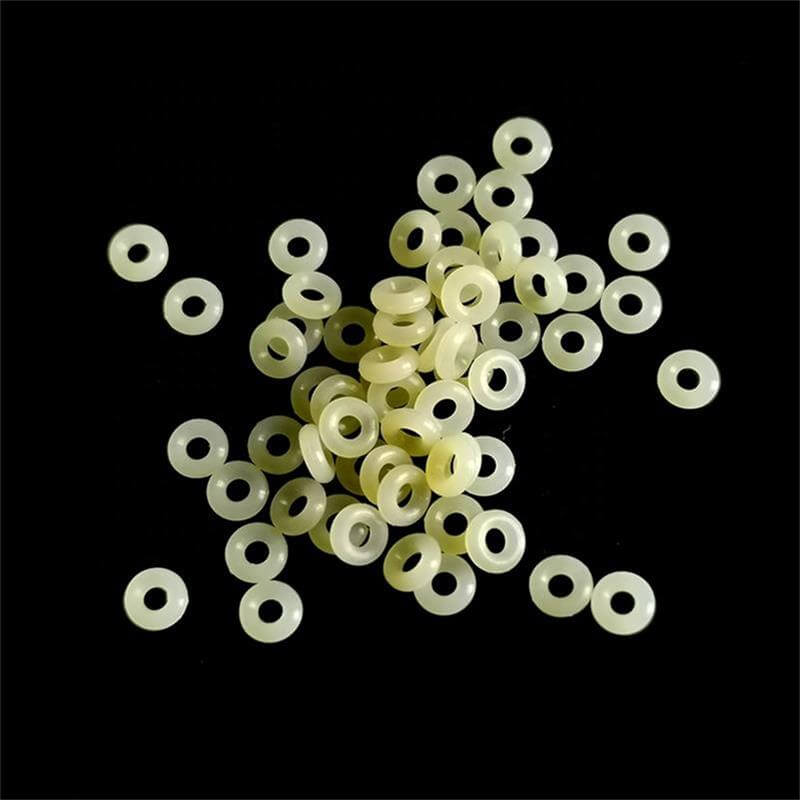
Polyurethane O-Rings, also known as PU O-Rings or Urethane O-Rings, are high-performance O-shaped sealing rings made from polyurethane rubber. Polyurethane is a unique elastomer with a tensile modulus between that of plastics and rubber, offering excellent wear resistance, toughness, and sealing performance.
PU O-rings typically offer a hardness range of 60 to 95 Shore A. Lower hardness grades offer greater flexibility, ideal for low-pressure static sealing on rough surfaces. Medium to high hardness grades (70-90 Shore A) are preferred for dynamic applications due to superior extrusion resistance and wear life.
Savvy Rubber specializes in compression molding for consistent, high-volume standard polyurethane O-rings (MPU). We also use casting processes for custom polyurethane (CPU) components that require superior mechanical performance.
Specifications
- Material: PU / Polyurethane / Urethane / MPU / CPU / TPU / AU / EU
- Continuous Temperature Range: -30°C (-22°F) to 80°C (176°F)
- Low Operating Temperature Limit: -40°C (-40°F)
- Maximum Peak Operating Temperature: 110°C (230°F)
- Durometer Hardness Range: Shore A 60-95
- Standard Durometer Hardness: Shore A 70 or 90
- Less Used Duro Hardness: Shore A 60, 80, 95
- Color: Natural Yellow (standard), custom color is available
- Outline: Circle (standard), square, rectangular, custom
- Cross Section Profile: Round (standard), square, X, D, T, custom
- Cross Section Width (CS): 0.5 to 20 mm (0.020 to 0.787 inch)
- Inside Diameter (ID): 0.7 to 2965 mm (0.028 to 116.732 inch)
- Standard Size: AS 568, BS 1806, ISO 3601, DIN 3771, JIS B 2401
- Shelf Life: 1-2 years
- Compliance: RoHS, REACH, FDA (available upon request)
- Price Level: Common
Performance Characteristics
The table below summarises the typical performance of standard Polyurethane / PU / Urethane (specific MPU rubber) across key environmental resistance, chemical compatibility, and mechanical attributes. Ratings are based on industry-standard evaluations: Excellent (recommended), Good (suitable with limitations), Fair (limited use), and Poor (not recommended).
Excellent
- Ozone
- Oils
- Water (EU)
- Abrasion
- Tensile Strength
Good
- Weather
- Compression Set
Fair
- Chemicals
- Acid
- Alkali
Poor
- Water (AU)
- Steam
- Flame
Material Data Sheet
The following table presents the physical properties and resistance performance of our standard Millable Polyurethane Elastomer (MPU, EU Grade) O-ring material. All test results are based on cured compounds tested in accordance with the indicated standards, including mechanical properties, environmental resistance, and processing stability.
| Savvy Rubber PU / Polyurethane Shore A 70 Material Data Sheet | |||
|---|---|---|---|
| Material Type: Millable Polyurethane Elastomer (MPU), EU (Polyether) Grade | |||
| ORIGINAL PHYSICAL PROPERTIES | TEST METHOD | REQUIREMENTS | TYPICAL RESULTS |
| Appearance | Visual | – | Natural |
| Specific Gravity, g/cm³ | GB/T 533-2008 | 1.18 ± 0.02 | 1.18 |
| Hardness, Shore A | GB/T 531.1-2008 | 70 ± 3 | 71 |
| Tensile Strength, MPa | GB/T 528-2009 | ≥ 12 | 15.2 |
| Elongation at Break, % | ≥ 250 | 290 | |
| Tear Strength, kN/m | GB/T 529-2008 | ≥ 30 | 39 |
| RESISTANCE PROPERTIES | TEST METHOD | REQUIREMENTS | TYPICAL RESULTS |
| Abrasion Resistance | – | Excellent | Excellent |
| Hydrolysis Resistance | – | Excellent | Excellent |
| Low-Temp Flexibility | – | Excellent | Excellent |
| Ozone Resistance | – | Excellent | Excellent |
| Oil & Fuel Resistance | – | Excellent | Excellent |
| Heat Resistance | – | 80°C | Up To 100°C |
| PROCESSING & STORAGE | TEST METHOD | REQUIREMENTS | TYPICAL RESULTS |
| Curing Condition | – | 180°C Mold Cure | 7 min (2mm) |
| Storage Stability | – | Cool & Dry Place | 1-2 Years |
This is the Material Data Sheet (MDS) for our standard 70 Shore A Millable Polyurethane Elastomer (MPU, EU Grade) compound. Test results are typical values. Actual performance may vary by operating conditions, environmental exposure, and application specifics. For critical applications, we recommend sample testing.
Material Selection Guide
Understanding the differences between polyurethane materials is critical for optimal performance and service life in real-world applications. Polyurethane can be distinguished in two key ways: by processing type and by chemical grade.
By processing type, polyurethane includes MPU (Millable Polyurethane), CPU (Cast Polyurethane), and TPU (Thermoplastic Polyurethane). MPU is ideal for consistent, mass-produced sealing parts like O-rings. CPU delivers extreme durability for heavy-duty, custom-molded components. TPU offers high efficiency for thin-walled and mass-produced parts.
By chemical grade, polyurethane includes EU (PEU / Polyether Polyurethane) and AU (PUR / Polyester Polyurethane). EU excels in water, humidity, and low-temperature environments. AU provides superior mechanical strength, wear resistance, and oil resistance in dry conditions.
The following comparisons will help you choose the right grade for your operating conditions, including environmental resistance, mechanical properties, and cost efficiency.
| Item | MPU (Millable Polyurethane) | CPU (Cast Polyurethane) | TPU (Thermoplastic Polyurethane) |
|---|---|---|---|
| Chemical Type | Thermoset | Thermoset | Thermoplastic |
| Processing Method | Mixing + compression/injection molding | Liquid casting & room/low temp curing | Extrusion/injection molding |
| Curing Mechanism | Chemical cross-linking under heat & pressure | In-mold reaction curing of liquid prepolymer | Physical solidification after melting & cooling |
| Production Efficiency | Medium-High, suitable for batch production | Low, long cure time, ideal for custom/small batches | Very High, short cycle time, ideal for mass production |
| Mechanical Properties | Excellent, high abrasion & tear resistance, close to CPU | Outstanding, best overall performance, highest load-bearing capacity | Good, high toughness, but prone to creep under high load |
| Heat Resistance | Excellent: Continuous -30~80°C, peak up to 100°C | Excellent: Continuous -35~90°C, peak up to 110°C | Moderate: Continuous -40~80°C, softens at high temps |
| Hydrolysis Resistance | Customizable: Excellent (EU grade), limited (AU grade) | Customizable: Wide formulation range | Moderate: Poor (AU grade), better (EU grade) |
| Scrap Recyclability | Non-recyclable, thermoset scrap can only be landfilled/crushed | Non-recyclable, thermoset scrap can only be landfilled/crushed | Recyclable, scrap can be re-melted & pelletized |
| Mold Cost | Medium, requires standard vulcanization molds | Low, simple mold structure, temporary/lightweight molds available | High, requires precision hot runner molds |
| Typical Applications | O-rings, precision seals, oil seals, automotive bushings, heavy-duty shock absorbers | Large solid tires, mining screens, industrial rollers, heavy-duty custom parts | Cable jackets, films/tubes, consumer electronics accessories, and shoe materials |
| Key Advantage | Best balance of performance & production efficiency | Performance ceiling for extreme conditions | Best for processing convenience & thin-walled complex parts |
| Item | EU (Polyether Polyurethane) | AU (Polyester Polyurethane) |
|---|---|---|
| Chemical Backbone | Polyether Glycol (PTMEG, PPG) | Polyester Glycol (Adipate, PCL) |
| Hydrolysis Resistance | Excellent, stable in humid/wet/steam environments | Poor, prone to hydrolysis in hot/wet conditions (modified for improvement) |
| Microbial Resistance | Excellent, resistant to bacteria & fungi | Poor, susceptible to microbial degradation in damp environments |
| Low Temp Flexibility | Excellent, flexible to -60°C ~ -70°C (no brittle failure) | Good, stiffens at -40°C ~ -50°C |
| Heat Resistance | Good, continuous up to ~80°C (peak 90°C) | Slightly better, continuous up to ~90°C (peak 100°C) |
| Mechanical Strength | Good, high resilience & dynamic fatigue resistance | Excellent, superior tensile, tear & abrasion resistance |
| Oil & Fuel Resistance | Moderate to Good (mineral oils) | Excellent, resistant to oils, fuels & solvents |
| Typical Applications | Hydraulic seals, water pumps, marine parts, cold climate bushings | Heavy-duty wheels, mining screens, rollers, shoe soles, oilfield seals |
| Key Advantage | Best for wet, humid, freezing or steam environments | Best for dry, high-abrasion, oil-exposed or heavy-load applications |
| Cost Factor | Generally Higher | Generally Lower |
Features
Polyurethane (PU) O-rings offer outstanding mechanical strength, excellent wear and abrasion resistance, and superior resistance to oils, fuels, solvents, and swelling. They also provide excellent ozone resistance, high resilience, and good compression set. These properties make them ideal for dynamic sealing applications and heavy-duty working conditions where extrusion resistance is critical.
However, PU O-rings have limited high-temperature resistance and are not suitable for long-term continuous service above 80°C. Furthermore, hydrolysis-stable polyether-based grades (EU) are recommended for hot water, steam, or high-humidity environments. In contrast, standard polyester-based grades (AU) are susceptible to hydrolysis and should be avoided in these conditions.
Applications
Polyurethane (PU) O-rings are a popular and effective choice for low-to-medium pressure reciprocating seals and demanding dynamic sealing applications, thanks to their exceptional wear resistance and high mechanical strength. They are extensively used in automotive and transportation systems (such as suspension bushings and shock absorbers), marine equipment, and hydraulic and pneumatic circuits. Furthermore, they are critical components in heavy-duty sectors such as mining, construction, and general industrial machinery, where superior durability and high-pressure extrusion resistance are essential.


