
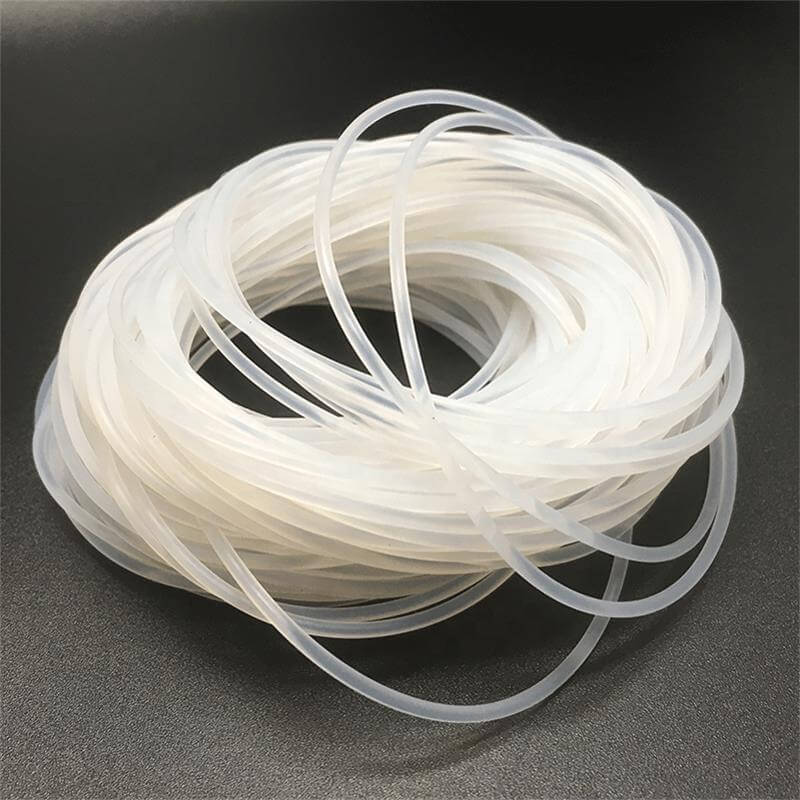
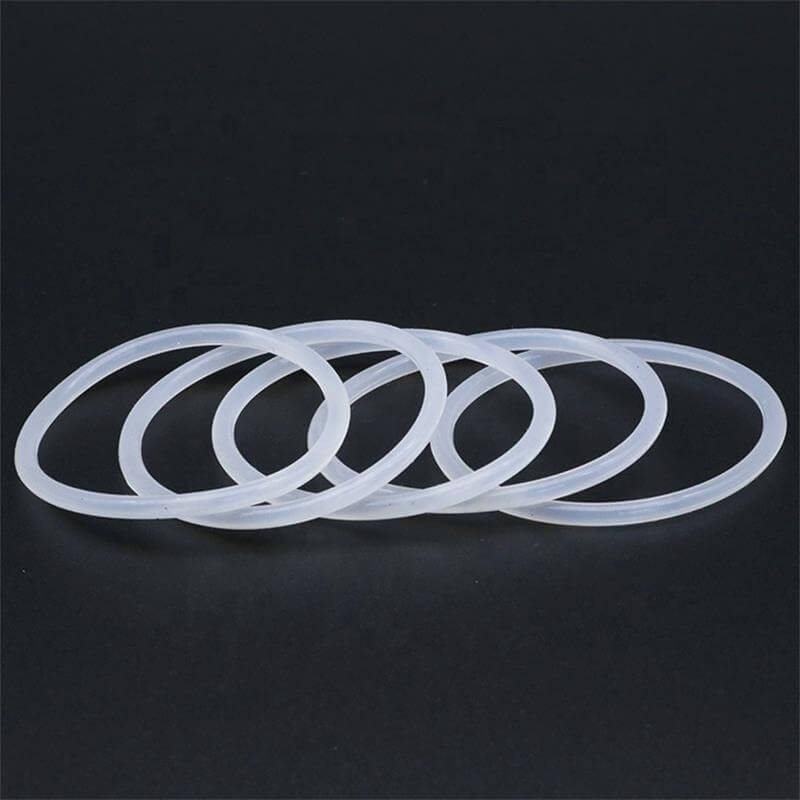

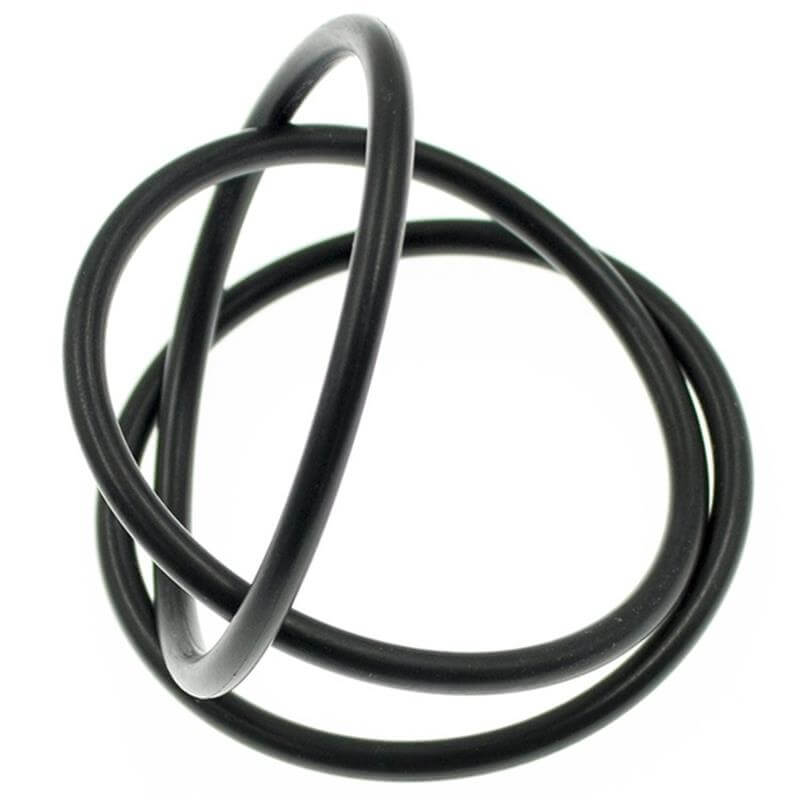
We are a leading food-grade rubber silicone o-rings manufacturer & supplier
- Payment Way: T/T, Western Union, Paypal
- Incoterm: EXW, FOB, CIF
- Shipping Way: By Air or Sea
- Manufacturer Place: Ningbo, China
- Delivery Time: 7 - 30 days
- Factory Status: Stocked for Sale
Share to SNS:
Description
Silicone o-rings or VMQ o-rings are annular products made of silicone rubber. Because of their special performance and wide temperature resistance range and excellent chemical performance, they are called special rubber o-rings together with Viton o-rings.
The main constituent material of a general silicone rubber o-ring seal is VMQ-methyl vinyl silicone rubber. Methyl vinyl silicone rubber is abbreviated as vinyl silicone rubber, which is made by copolymerization of dimethylsiloxane and a small amount of vinyl siloxane. The vinyl content is generally 0.1% to 0.3% (mole fraction). The introduction of a small amount of unsaturated vinyl has greatly improved its vulcanization process and finished product properties, especially heat aging resistance and high-temperature compression deformation resistance.
We have more than 10 years of manufacturing experience to produce all kinds of silicone o-rings, like soft silicone o-rings, large silicone o-rings, small silicone o-rings, stretchy silicone o-rings, FDA silicone o-rings, medical-grade silicone o-rings, tube dampers silicone o-rings, etc. At the same time, have many standard silicone o-rings for sale, and you can buy a small quantity or import a lot from our factory directly.
Specifications
- Material: VMQ / Silicone
- Temperature Range / Rating: -70 °C (-94 °F) to 220°C (428 °F)
- Low Operating Temperature Limit: -70 °C (-94 °F)
- High Operating Temperature Limit: 220°C (428 °F)
- Durometer Hardness Range: Shore A 40-80
- Standard Durometer Hardness: Shore A 70
- Color: Transparent (standard), clear, white, black, red, orange, custom
- Outline: Round, square, rectangular, custom
- Cross Section Shape: Round
- Cross Section Width (CS): 0.5 to 20 mm (0.020 to 0.787 inch)
- Inside Diameter (ID): 0.7 to 2965 mm (0.028 to 116.732 inch)
- Standard Size: AS 568, BS 1806, ISO 3601, DIN 3771, JIS B 2401
- Shelf Life: About 20 years
- Price Level: High
Features
Silicone o-rings have good electrical insulation properties. The tensile strength is poorer than that of general rubber and silicone o-rings’ compatiility in oil is very bad. The most prominent advantage of silicone o-rings is that they have excellent high-temperature resistance and antistatic properties, and can be produced into food-grade materials through a special formula process.
Advantages
- The tensile strength can reach 500psi and the anti-susceptibility can reach 88lbs after preparing the formula.
- Good compression deformation.
- Good resistance to neutral solvents.
- Excellent heat resistance.
- With excellent cold resistance.
- Excellent resistance to ozone and oxide erosion.
Disadvantages
- They are not recommended to be used in most thickened solvents, oils, thickened acids, and dilute sodium hydroxide.
- Compared with the NBR o-rings, the price is higher, and the corrosion resistance is not as good as the viton o-rings.
Chemical Resistance Properties
Excellent
- Ozone
- Weather
- Chemical
- Deformation
Good
- Oil
- Watertight
- Steam
Fair
- Acids
- Bases
Poor
- Abrasion
- Tensile Strength
- Fire
Applications
They are often used as seals, gaskets, or rubber parts in the household appliance industry, sealing in the food machinery industry, or sealing on various articles that come in contact with the human body. Silicone o-rings are FDA food-grade, so they are widely used in the medical and food industry.